Board-on-board fencing delivers wind-resistant privacy across Northern California’s hillside and flatland properties. This style layers vertical boards on both fence sides with overlapping placement. We install board-on-board systems for residential, ranch, and commercial projects throughout the Sacramento region. The design options include variable overlap spacing, wood species selection, and height configurations that tie directly into our full range of wood fencing options. Board-on-board construction outperforms stockade and picket fences in high-wind areas common to our foothills and valley locations. Your next steps include a site evaluation at your property, permit verification with your local building department, and reviewing the official residential fence safety and barrier requirements outlined in the International Residential Code before selecting materials based on your climate zone and privacy needs.
Board-on-Board Fencing Provides Matching Appearance on Both Property Sides
Homeowners in Folsom, Roseville, and Sacramento suburbs choose board-on-board designs for a simple reason. Both neighbors see vertical boards instead of exposed rails or back framing. This eliminates the “good side” versus “bad side” conflict that creates tension between property owners.
Your fence becomes a shared visual asset rather than a source of disagreement. Both yards receive the same clean, vertical board appearance. This symmetry increases property values across shared fence lines. Real estate agents in our area consistently note that dual-sided fences improve home appeal during showings.
Many HOAs in Northern California prohibit one-sided privacy fences. Board-on-board construction meets these requirements without triggering additional permit reviews. We install this style in planned communities throughout Sacramento County where architectural guidelines mandate finished appearances on both sides.
Properties with shared sightlines benefit most from symmetrical board placement. Corner lots, side-yard boundaries, and homes backing to walking trails all gain from dual-sided design. You avoid neighbor complaints while creating privacy for your outdoor spaces.
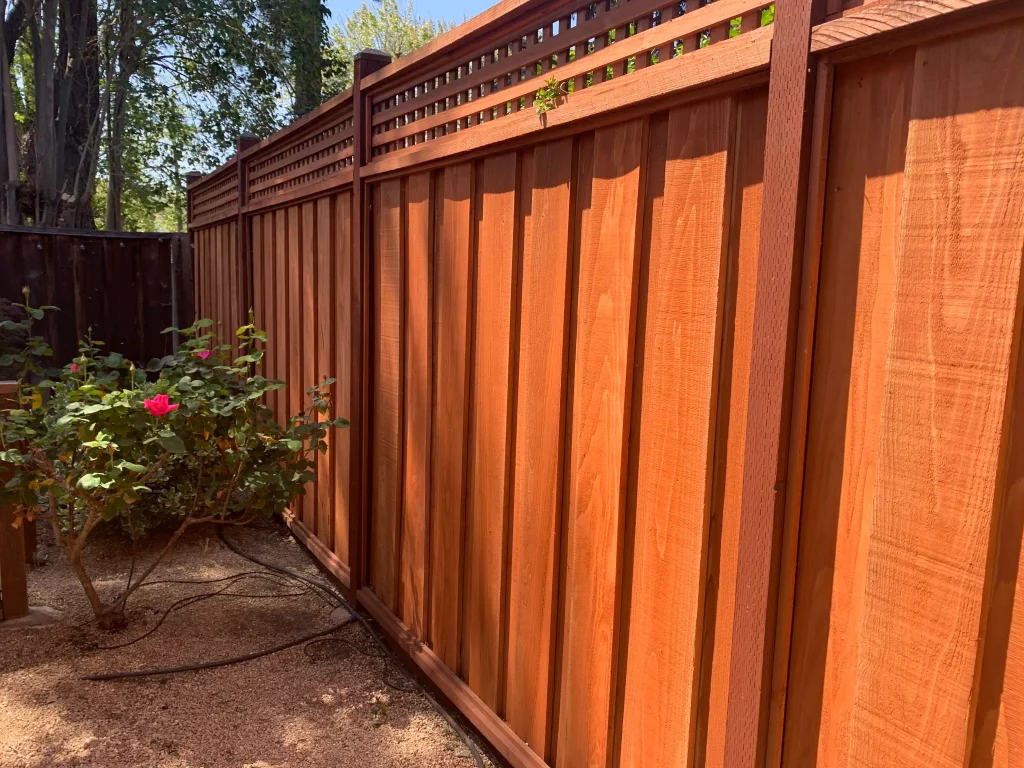
Overlapping Boards Block Wind and Create Full Privacy Without Gaps
Hillside homes in El Dorado Hills and Auburn face constant wind exposure throughout the year. Board-on-board construction with 1-2 inch overlap eliminates the light gaps found in spaced picket styles. Wind cannot create tunnels between boards when overlap placement is correct.
Families with pools or outdoor living areas need total visual privacy. You gain complete sightline blocking when boards overlap properly on both fence sides. Intruders cannot scout your property layout by peering between fence boards. This security advantage matters for pools, patios, and ground-floor windows.
Commercial properties throughout Sacramento County require secure perimeters without visibility gaps. We install board-on-board systems for businesses storing equipment, materials, or inventory. The overlap prevents surveillance from parking lots or adjacent properties.
Board-on-board design reduces noise transmission compared to spaced styles. Overlapping boards create a sound barrier that chain-link and picket fences cannot match. Traffic noise from Highway 50 and I-80 decreases noticeably behind properly installed board-on-board fencing.
Coastal areas like Marin County experience strong Pacific winds year-round. The overlapping boards flex slightly during gusts instead of catching wind like a solid wall. This prevents the panel cracking common in rigid stockade designs. Your fence moves with the wind rather than fighting against it.
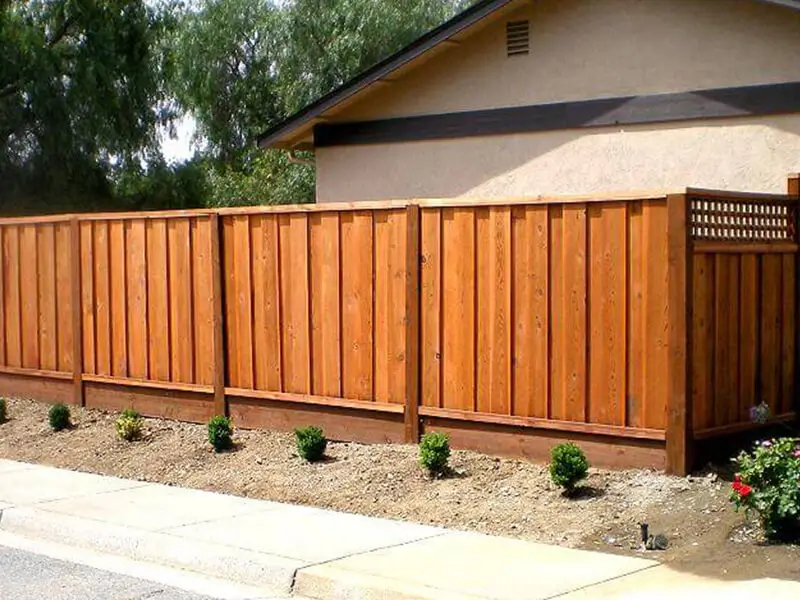
This Fence Style Handles Northern California’s Climate Shifts Better Than Flat Panels
Properties in Citrus Heights and Fair Oaks endure hot summers and wet winters each year. Inland regions see 40-degree temperature swings between daytime heat and nighttime cooling. Wood fences must survive these expansion and contraction cycles without warping the fence line.
Overlapping boards allow natural wood movement as temperatures change. Each board can expand or contract slightly without stressing neighboring boards or rails. Flat panels lock boards together, which creates pressure points that lead to warping and splits.
Air circulates between the two board layers in board-on-board construction. This prevents moisture from collecting behind boards where rot starts. Your fence dries faster after rain compared to solid panel designs that trap water against the wood.
A properly installed board-on-board fence lasts 15-20 years with regular staining in Northern California conditions. We see these fences outlast flat panels by 3-5 years in the Sacramento Valley. The flexible design adapts to climate stress instead of fighting it.
Clay soil throughout the Sacramento Valley causes ground shifting during wet and dry seasons. Posts move slightly as the soil expands and contracts. Board-on-board construction flexes with this post movement better than rigid panel systems. Your fence maintains alignment even when the ground beneath it shifts.
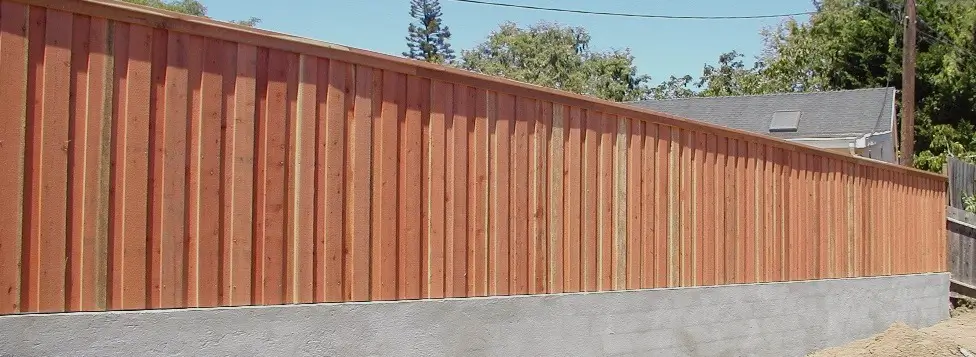
Proper Spacing and Overlap Prevent Warping in Coastal and Inland Conditions
Northern California spans diverse climate zones that affect wood fence installation. Coastal properties face fog and moisture while inland areas experience dry heat. We adjust board spacing and overlap based on your property’s distance from the Pacific Ocean.
Inland climates require 1-inch overlap as the standard installation specification. Coastal zones need 1.5-2 inch overlap to account for higher humidity levels. This extra overlap compensates for greater wood expansion when moisture enters the grain. Bay Area fog creates 80-90% humidity overnight, which makes wood swell more than in Sacramento Valley conditions.
Spacing errors cause board cupping and rail stress over time. Boards placed too tightly create pressure as wood expands during wet seasons. Your fence develops warps and splits when boards cannot move naturally. Proper gaps between boards and rails allow expansion without creating stress points.
We use galvanized fasteners on all redwood board-on-board installations. Standard steel screws create rust streaks that stain the wood within the first year. Galvanized hardware prevents these streaks while maintaining holding strength through wet and dry cycles. Your fence keeps its clean appearance without rust marks bleeding through stain or sealant.
Board-on-Board Beats Stockade Fencing for Properties Facing Strong Wind Exposure
Ranches in Placer County and rural Sacramento County need livestock containment that survives seasonal storms. Hillside lots face downslope winds that topple solid-panel fences during winter weather. Board-on-board construction withstands these conditions better than stockade designs.
Wind passes between the overlapping boards instead of hitting a solid wall. This reduces pressure on posts and rails throughout your fence line. Stockade and flat-panel fences catch wind like a sail, which stresses the entire structure. Your board-on-board fence flexes with gusts rather than resisting them.
Sierra foothills experience 30-40 mph wind gusts during fall and winter months. We see fewer blown-over sections with board-on-board installations compared to stockade fences in these areas. The overlapping design distributes wind force across multiple boards instead of concentrating pressure on a single panel.
Homeowners in exposed locations want privacy without constant repair calls after storms. Board-on-board fencing delivers both wind resistance and visual screening. You avoid the choice between privacy and durability that stockade designs force on hillside properties.
FAQs
Does board-on-board fencing require permits in Northern California?
Most cities in Northern California require permits for fences over 6 feet tall or located within setback zones. Setback distances vary by city, typically ranging from 3-5 feet from property lines. We check your local building department requirements during the initial consultation. Corner lot properties often face additional height restrictions near street intersections. Permit fees range from $50-$200 depending on your city and fence specifications.
How long does board-on-board fence installation take in Sacramento County?
Typical residential board-on-board installations take 3-5 days depending on linear footage and terrain conditions. A standard 150-foot fence on level ground requires 3 days from start to finish. Sloped properties or rocky soil add 1-2 days to the timeline. We complete most projects within one week including permit approvals and material delivery.
Can board-on-board fencing handle slopes common in El Dorado Hills?
Board-on-board fencing adjusts to grade changes while maintaining overlap and privacy throughout the fence line. Each board can be cut to follow your property’s slope. The overlapping design prevents gaps that appear when stepping down hillsides. We install board-on-board systems on slopes up to 30 degrees without sacrificing visual screening or structural integrity.
What wood types work best for board-on-board fences in Northern California?
Redwood resists rot in coastal humidity zones while pressure-treated pine suits inland areas like Sacramento County. Redwood contains natural tannins that repel insects and decay. Pressure-treated pine costs less and performs well in dry inland climates. We recommend wood species based on your property’s specific climate conditions.
Will a board-on-board fence block noise from Highway 50 or I-80?
Board-on-board fences reduce traffic noise better than spaced picket or chain-link styles due to the overlapping board design. You will notice decreased highway noise in your yard, though complete sound elimination is not realistic. The overlapping boards create a barrier that absorbs and deflects sound waves. Properties within 500 feet of major highways see the most noticeable improvement after installation.
How much overlap should boards have in Folsom versus Bay Area properties?
Folsom installations use 1-inch board overlap as the standard specification while Bay Area properties need 1.5-2 inches for fog exposure. The extra overlap in coastal zones accounts for higher wood expansion from moisture. Sacramento Valley’s dry climate causes less wood movement than areas with regular fog. We adjust overlap measurements based on your property’s distance from the Pacific Ocean and local humidity patterns.