Aluminum fencing is a smart choice in Greater Sacramento because it adds security without blocking foothill views or slowing those much-needed summer breezes. If you’re comparing options for your yard or business, our fence installation services give you a full overview of what fits your property best. This page focuses on aluminum fence installation for residential perimeters, pool areas, front yards, commercial sites, and HOA-approved layouts. Your consultation includes a full property review, permit guidance, and an installation timeline based on soil conditions and site access. Horizon Fence & Custom Gates also handles clay-soil post depths, spacing rules, and code requirements so your installation is done right the first time.
Homeowners who want to double check Sacramento’s climate patterns can review official temperature and rainfall data provided by the National Weather Service. It’s a reliable source for understanding how heat, sun, and winter rain affect long term fence performance. You can see the full regional climate breakdown on the National Weather Service Sacramento page.
Aluminum Fencing Lasts 30+ Years in Sacramento Valley Heat Without Rust or Rot
Powder-coated aluminum resists UV damage and temperature cycling from winter freezes to summer heat above 100°F. You get zero maintenance compared to wood that splits or steel that corrodes. Property owners in Elk Grove, Folsom, and Roseville replace rotted wood fences or rusted chain-link after 10-15 years of valley weather exposure.
Sacramento’s 200+ sunny days per year and low humidity create ideal conditions for aluminum. The same climate accelerates wood decay and surface rust on unprotected metals. Your aluminum fence maintains its finish through seasonal temperature swings from 30°F winters to 105°F summers.
The powder coating bonds to aluminum at the molecular level. Paint on wood or steel sits on the surface and peels when moisture gets underneath. Aluminum won’t warp, fade, or degrade under direct sun exposure. You avoid the annual staining schedule wood requires and the rust spots that appear on chain-link after a few rainy seasons.
Aluminum Fences Add Curb Appeal and Property Value in Greater Sacramento Neighborhoods
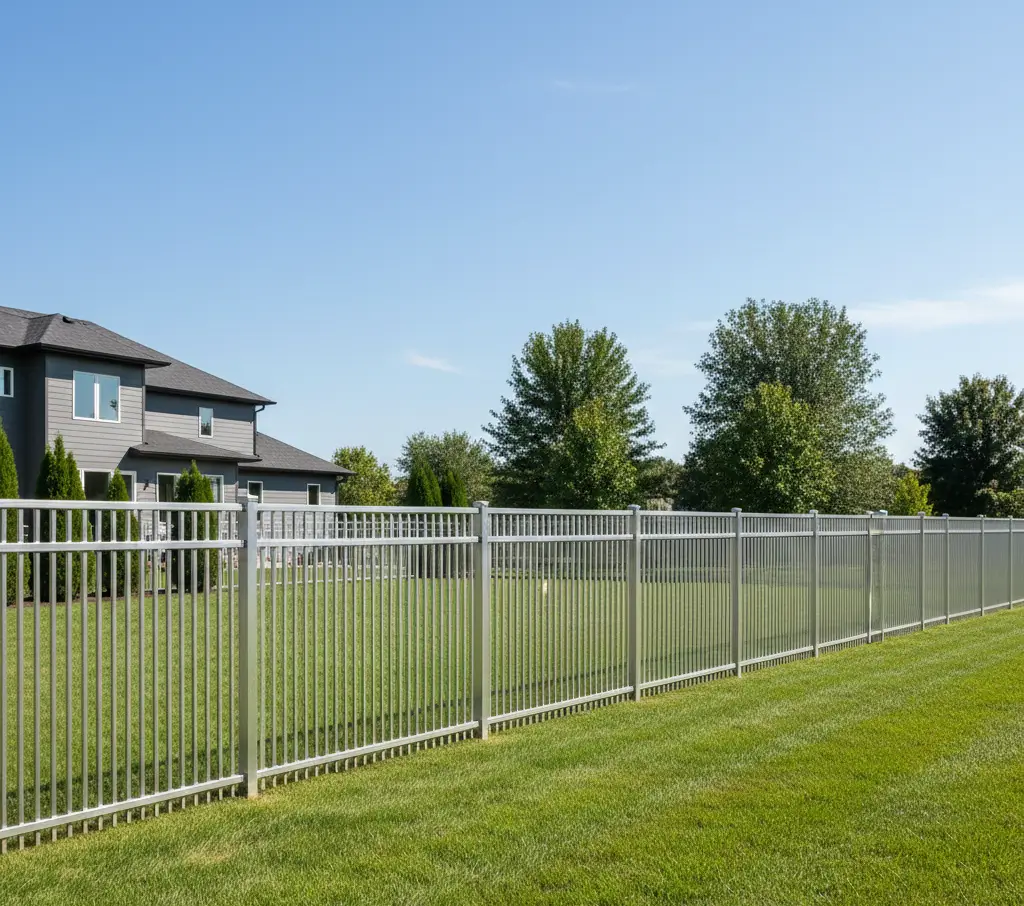
Ornamental aluminum styles provide elegant street presence that increases perceived property value 3-5% compared to chain-link or aging wood. Homeowners in Natomas, Land Park, and Fair Oaks upgrade front yards for resale value or to meet HOA architectural standards for perimeter fencing. Spear-top, flat-top, and arched designs create clean sightlines while defining property boundaries.
Many Greater Sacramento HOAs require decorative metal fencing in front setbacks. Aluminum meets those standards while staying within typical improvement budgets. You get the formal appearance of wrought iron without the weight, rust risk, or higher installation cost.
Black, bronze, and white powder coat finishes complement most home exteriors. The uniform picket spacing and level top rails create visual consistency across long fence runs. Potential buyers notice well-maintained perimeter fencing during property tours. A fresh aluminum fence signals that other home systems receive similar care and investment.
Proper Post Depth and Concrete Setting Prevent Fence Failure in Clay Soil
Posts set 30-36 inches deep in concrete footings resist seasonal ground movement that tilts shallow posts and stresses panel connections within 2-3 years. Commercial property managers and residential owners in Citrus Heights and Carmichael face expansive clay soil that causes fence posts to heave or lean after winter rains.
Sacramento region clay soils expand when wet and shrink when dry. This creates 2-3 inch ground movement that requires deeper footings than sandy or loam soil regions. Shallow posts shift during the first rainy season and pull panel brackets out of alignment. You see gaps between rails and posts or pickets that no longer sit vertical.
We dig post holes to 36 inches and pour 6-inch concrete footings around each post. The concrete cures for 24-48 hours before we attach panels. This anchoring method distributes stress across the footing rather than concentrating force at the post base. Your fence stays plumb through multiple wet-dry cycles.
Posts placed at the minimum 24-inch depth move during soil expansion. The movement appears gradual but compounds over several seasons. Proper depth prevents the lean that develops when clay pushes against shallow footings from below.

Aluminum Fence Height and Ground Clearance Meet Pool Code and Pet Containment Needs
Pool owners in Rancho Cordova and West Sacramento require 5-foot barrier height with self-closing gates. Dog owners need fencing that prevents escape under fence lines. A 2-3 inch ground clearance allows drainage and prevents panel corrosion while maintaining 48-60 inch barrier height.
Sacramento County requires 5-foot pool barriers with gaps under 4 inches. Winter rains create standing water that damages fences set directly on grade. The small clearance lets water flow underneath during heavy rain while meeting code requirements. Most dog breeds cannot dig under or squeeze through a 2-3 inch gap.
We measure barrier height from grade to the top rail. Sloped yards require stepped panels to maintain consistent height across elevation changes. Each panel section stays level while posts adjust to terrain. You get compliant barrier height at every point along the fence line.
Self-closing hinges and gravity latches meet California pool code for gate hardware. The latch sits 54 inches above grade so young children cannot reach it from outside the enclosure. Gates swing away from the pool and close automatically when released. Your aluminum pool fence combines required safety features with visibility that lets you monitor the water from inside your home.
Professional Installation Avoids DIY Mistakes That Compromise Fence Strength and Appearance
Experienced fence contractors in Greater Sacramento achieve plumb posts, level rails, uniform spacing, and proper concrete cure times. Homeowners in Arden-Arcade and Foothill Farms attempt self-installation to save costs but face challenges with post alignment, panel leveling, and concrete setting in clay soil. DIY mistakes lead to leaning, sagging, or visual irregularities within the first year.
DIY installers in Sacramento often misjudge post-hole depth requirements for clay soil. They skip the 6-inch concrete footings needed to resist ground movement. Posts placed in bare earth or shallow concrete shift during the first rainy season. You see panels that tilt or rails that no longer run parallel to the ground.
We use string lines and laser levels to mark post locations before digging. Each post gets checked for plumb in two directions before concrete sets. Panel brackets attach at measured heights to keep top rails level across long runs. This precision prevents the wavy appearance that happens when posts sit at varying depths or angles.
Concrete needs 24-48 hours to cure before panels attach. Rushing this step leaves posts loose in partially set concrete. The weight of panels then shifts posts out of alignment. Professional installation includes proper cure time and staged assembly. Your fence looks uniform and stays structurally sound through seasonal ground movement.

Frequently Asked Questions About Aluminum Fence Installation in Greater Sacramento
How deep should fence posts be installed for aluminum fencing in Greater Sacramento?
Posts should be installed 30-36 inches deep with 6-inch concrete footings to resist clay soil expansion during winter rains. Sacramento region clay expands when wet and shrinks during dry months. This seasonal movement shifts shallow posts out of plumb within 2-3 years. Deeper footings distribute ground pressure across a larger surface area and keep posts stable through multiple wet-dry cycles.
Does aluminum fencing hold up in Sacramento summer heat above 100°F?
Yes, powder-coated aluminum maintains color and structural integrity in temperatures up to 120°F without warping. The powder coating bonds to aluminum at the molecular level and resists UV degradation. Sacramento’s 200+ sunny days per year will not fade or crack the finish. Aluminum expands and contracts minimally with temperature changes compared to vinyl or wood.
What ground clearance works for aluminum fences in Greater Sacramento yards with drainage issues?
A 2-3 inch clearance allows water flow during rainy season while preventing most dogs from digging under. Winter rains create standing water in low spots across Greater Sacramento properties. Fences set directly on grade trap water and develop corrosion at the soil line. The small gap lets runoff pass underneath while maintaining barrier height that meets pool code and containment needs.
Can aluminum fence installation in Greater Sacramento start immediately after consultation?
Installation typically begins within 1-2 weeks after permit approval and property line verification. Sacramento County requires permits for fences over 6 feet tall or within front setback areas. We handle permit applications and wait for approval before scheduling installation. Property line verification prevents encroachment issues with neighbors.
Do aluminum fences meet HOA requirements in Greater Sacramento neighborhoods?
Most ornamental aluminum styles comply with HOA architectural standards for front yard and perimeter fencing. Many Greater Sacramento HOAs require decorative metal fencing in front setbacks and restrict chain-link or solid panel designs. We review your HOA guidelines during consultation and recommend compliant styles. Black, bronze, and white finishes typically receive approval.
How long does professional aluminum fence installation take in Greater Sacramento?
100-200 linear feet typically requires 2-3 days including post-hole excavation in clay soil and concrete curing time. Day one covers layout, post-hole digging, and post setting in concrete. Day two allows concrete to cure. Day three includes panel installation and gate hardware adjustment. Larger projects or complex terrain may extend the timeline.